Oscar Nemon (1906–1985)
Married Life
Bronze
Numbered 3/15
Cast by Morris Singer Foundry
Date: Mid-20th century
A museum-quality bronze maquette by Oscar Nemon, Married Life represents the preparatory model for the monumental sculpture of Winston Churchill and his wife, Clementine, installed at Chartwell, Churchill’s private residence in Kent.
This work stands as one of the most intimate and psychologically nuanced sculptural representations of Churchill ever produced, distinguished by its focus on companionship rather than political authority.
In Married Life, Nemon depicts Winston Churchill seated beside Clementine Churchill in a composition defined by quiet balance and emotional restraint. Churchill’s posture is relaxed yet grounded, conveying weight and introspection, while Clementine’s presence is composed and stabilizing, forming an essential counterpoint within the composition.
Unlike traditional portrayals of Churchill as a solitary wartime leader, this work emphasizes partnership. Clementine is not secondary but integral, reflecting Churchill’s own recognition of her importance in his life. The figures are united through proximity and subtle interaction rather than overt gesture, reinforcing the enduring nature of their relationship.
The bronze surface retains the immediacy of Nemon’s modeling, with expressive textures that animate the form and capture the vitality of the sculptor’s hand. This approach prioritizes psychological truth over formal idealization, aligning the work more closely with modern portrait sculpture than with conventional state monument.
The present maquette served as the working model for the monumental sculpture at Chartwell, where the composition is realized at full scale. As such, it represents the most direct expression of Nemon’s original vision.
Nemon’s relationship with Churchill began in Marrakesh in 1951, where the artist, initially hesitant to approach the Prime Minister, modeled his likeness from memory. Clementine Churchill, upon seeing the result, immediately recognized its authenticity and requested that it be kept, remarking that it captured her husband as she knew him. This encounter led to a long-standing collaboration between artist and sitter.
A Croatian-born Jewish sculptor, Nemon had lost twenty-two members of his family during the Holocaust. His naturalization as a British citizen in 1946 reflects a profound sense of gratitude toward Britain and Churchill’s leadership, a sentiment that informs the depth and sincerity of his work.
This bronze is from a limited edition of 15 casts. Works of this nature—directly connected to a major public monument and to Churchill’s personal residence—are exceptionally rare on the market.
Nemon’s Churchill sculptures are represented in major institutional settings, including the Guildhall in London, the Members’ Lobby of the House of Commons, and Windsor Castle. Within this body of work, Married Life is unique in presenting Churchill in a relational, personal context, offering a perspective absent from his more formal public monuments.
Provenance: [Insert provenance]
Literature:
Oscar Nemon, unpublished memoirs and correspondence relating to Churchill's sittings
Archival material relating to the Chartwell sculpture commission
Oscar Nemon (1906–1985)
Married Life
Bronze
Numbered 3/15
Cast by Morris Singer Foundry
Date: Mid-20th century
A museum-quality bronze maquette by Oscar Nemon, Married Life represents the preparatory model for the monumental sculpture of Winston Churchill and his wife, Clementine, installed at Chartwell, Churchill’s private residence in Kent.
This work stands as one of the most intimate and psychologically nuanced sculptural representations of Churchill ever produced, distinguished by its focus on companionship rather than political authority.
In Married Life, Nemon depicts Winston Churchill seated beside Clementine Churchill in a composition defined by quiet balance and emotional restraint. Churchill’s posture is relaxed yet grounded, conveying weight and introspection, while Clementine’s presence is composed and stabilizing, forming an essential counterpoint within the composition.
Unlike traditional portrayals of Churchill as a solitary wartime leader, this work emphasizes partnership. Clementine is not secondary but integral, reflecting Churchill’s own recognition of her importance in his life. The figures are united through proximity and subtle interaction rather than overt gesture, reinforcing the enduring nature of their relationship.
The bronze surface retains the immediacy of Nemon’s modeling, with expressive textures that animate the form and capture the vitality of the sculptor’s hand. This approach prioritizes psychological truth over formal idealization, aligning the work more closely with modern portrait sculpture than with conventional state monument.
The present maquette served as the working model for the monumental sculpture at Chartwell, where the composition is realized at full scale. As such, it represents the most direct expression of Nemon’s original vision.
Nemon’s relationship with Churchill began in Marrakesh in 1951, where the artist, initially hesitant to approach the Prime Minister, modeled his likeness from memory. Clementine Churchill, upon seeing the result, immediately recognized its authenticity and requested that it be kept, remarking that it captured her husband as she knew him. This encounter led to a long-standing collaboration between artist and sitter.
A Croatian-born Jewish sculptor, Nemon had lost twenty-two members of his family during the Holocaust. His naturalization as a British citizen in 1946 reflects a profound sense of gratitude toward Britain and Churchill’s leadership, a sentiment that informs the depth and sincerity of his work.
This bronze is from a limited edition of 15 casts. Works of this nature—directly connected to a major public monument and to Churchill’s personal residence—are exceptionally rare on the market.
Nemon’s Churchill sculptures are represented in major institutional settings, including the Guildhall in London, the Members’ Lobby of the House of Commons, and Windsor Castle. Within this body of work, Married Life is unique in presenting Churchill in a relational, personal context, offering a perspective absent from his more formal public monuments.
Provenance: [Insert provenance]
Literature:
Oscar Nemon, unpublished memoirs and correspondence relating to Churchill's sittings
Archival material relating to the Chartwell sculpture commission

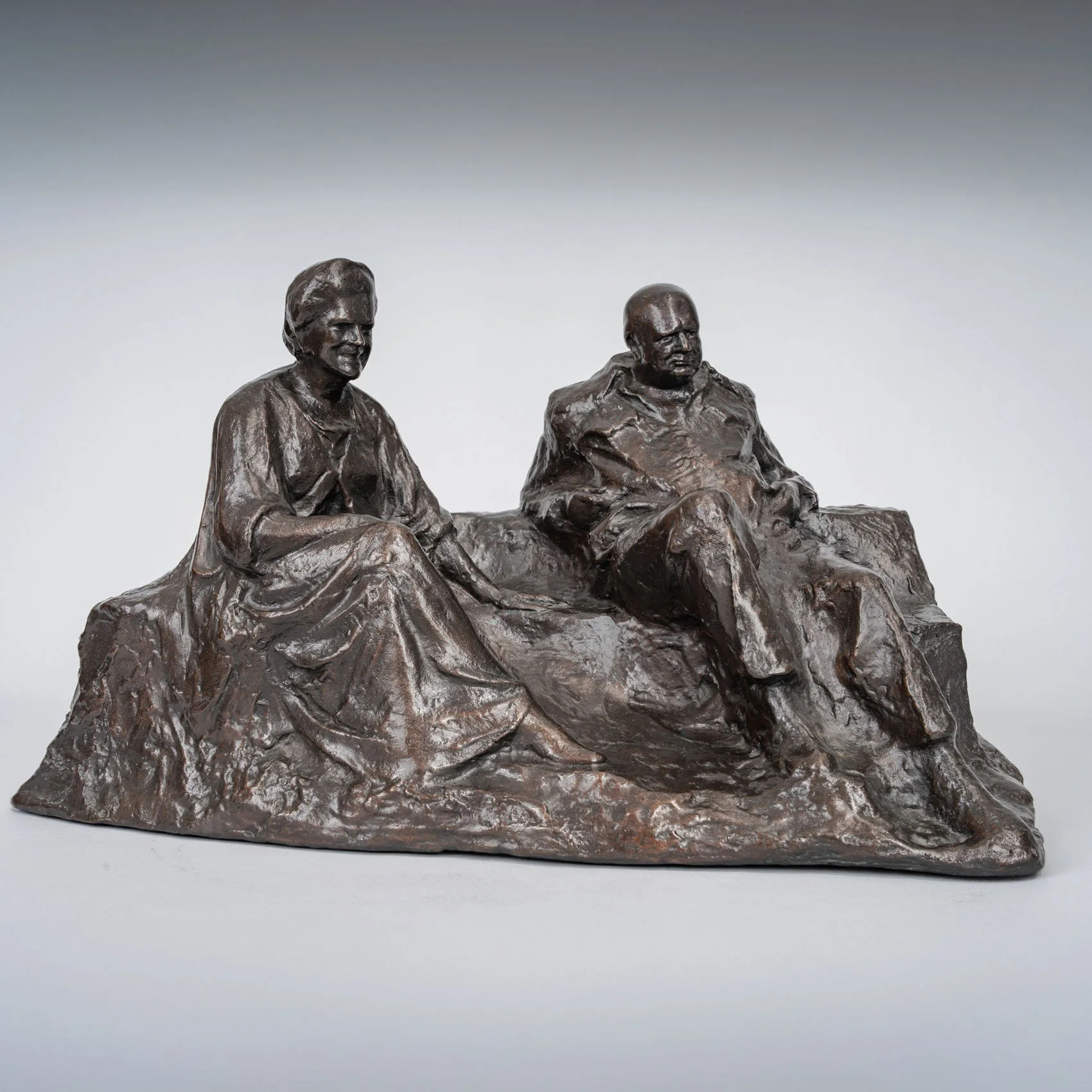 Image 1 of 4
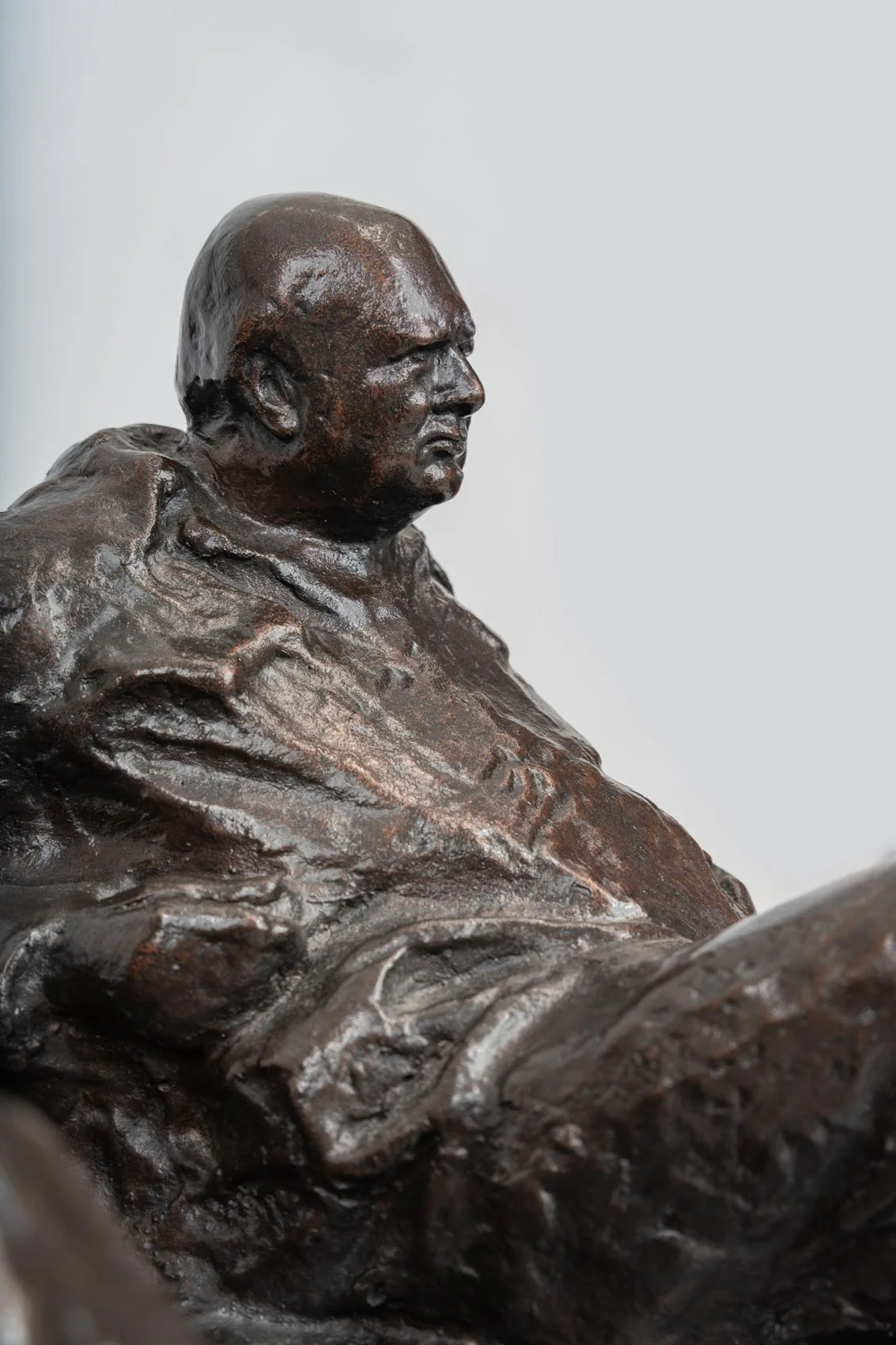 Image 2 of 4
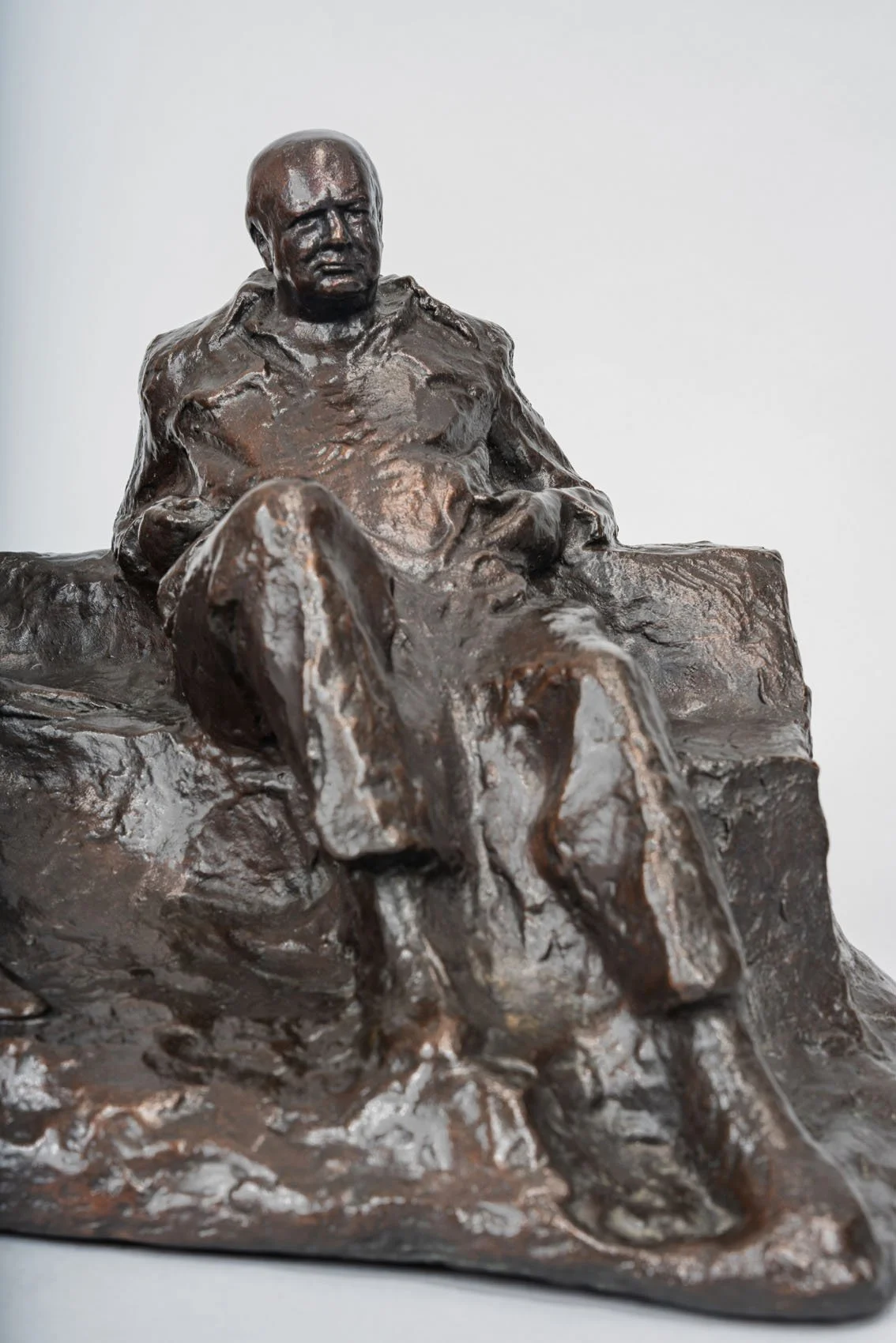 Image 3 of 4
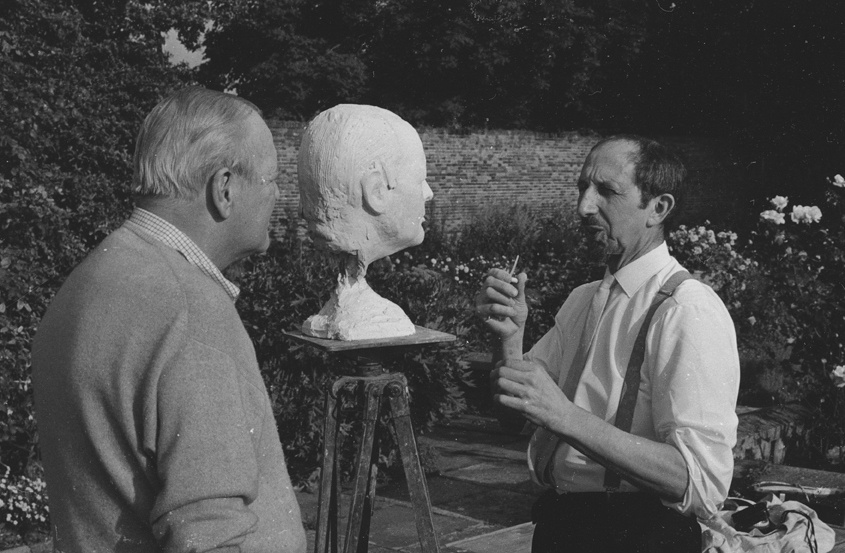 Image 4 of 4