A CUIR NATUREL MALLE À CHAPEAU WITH PAINTED STRIPES AND INITIALS
, EARLY 20TH CENTURY
Of square form, constructed in natural leather with a well-developed patina, the case is bound with riveted leather bands and fitted with a brass lockplate and protective corner mounts, the lid centered with a leather handle and stenciled R.B. beneath a coronet, the body encircled by grey and yellow painted identification stripes; the interior lined in cream canvas and retaining the maker’s label.
Designed for the transport of hats and delicate personal effects, the malle à chapeau formed part of Louis Vuitton’s range of specialized travel cases produced in the early 20th century. Examples executed in cuir naturel were typically reserved for bespoke orders, the untreated leather acquiring a distinctive surface through use. The addition of personalized striping and initials reflects the house’s tradition of custom identification, while the crowned monogram suggests a distinguished original owner.
Comparative examples are illustrated in: Pierre Léonforte and Eric Pujalet-Plaà, Louis Vuitton: 100 Legendary Trunks, Abrams, New York, 2010.
A CUIR NATUREL MALLE À CHAPEAU WITH PAINTED STRIPES AND INITIALS
, EARLY 20TH CENTURY
Of square form, constructed in natural leather with a well-developed patina, the case is bound with riveted leather bands and fitted with a brass lockplate and protective corner mounts, the lid centered with a leather handle and stenciled R.B. beneath a coronet, the body encircled by grey and yellow painted identification stripes; the interior lined in cream canvas and retaining the maker’s label.
Designed for the transport of hats and delicate personal effects, the malle à chapeau formed part of Louis Vuitton’s range of specialized travel cases produced in the early 20th century. Examples executed in cuir naturel were typically reserved for bespoke orders, the untreated leather acquiring a distinctive surface through use. The addition of personalized striping and initials reflects the house’s tradition of custom identification, while the crowned monogram suggests a distinguished original owner.
Comparative examples are illustrated in: Pierre Léonforte and Eric Pujalet-Plaà, Louis Vuitton: 100 Legendary Trunks, Abrams, New York, 2010.

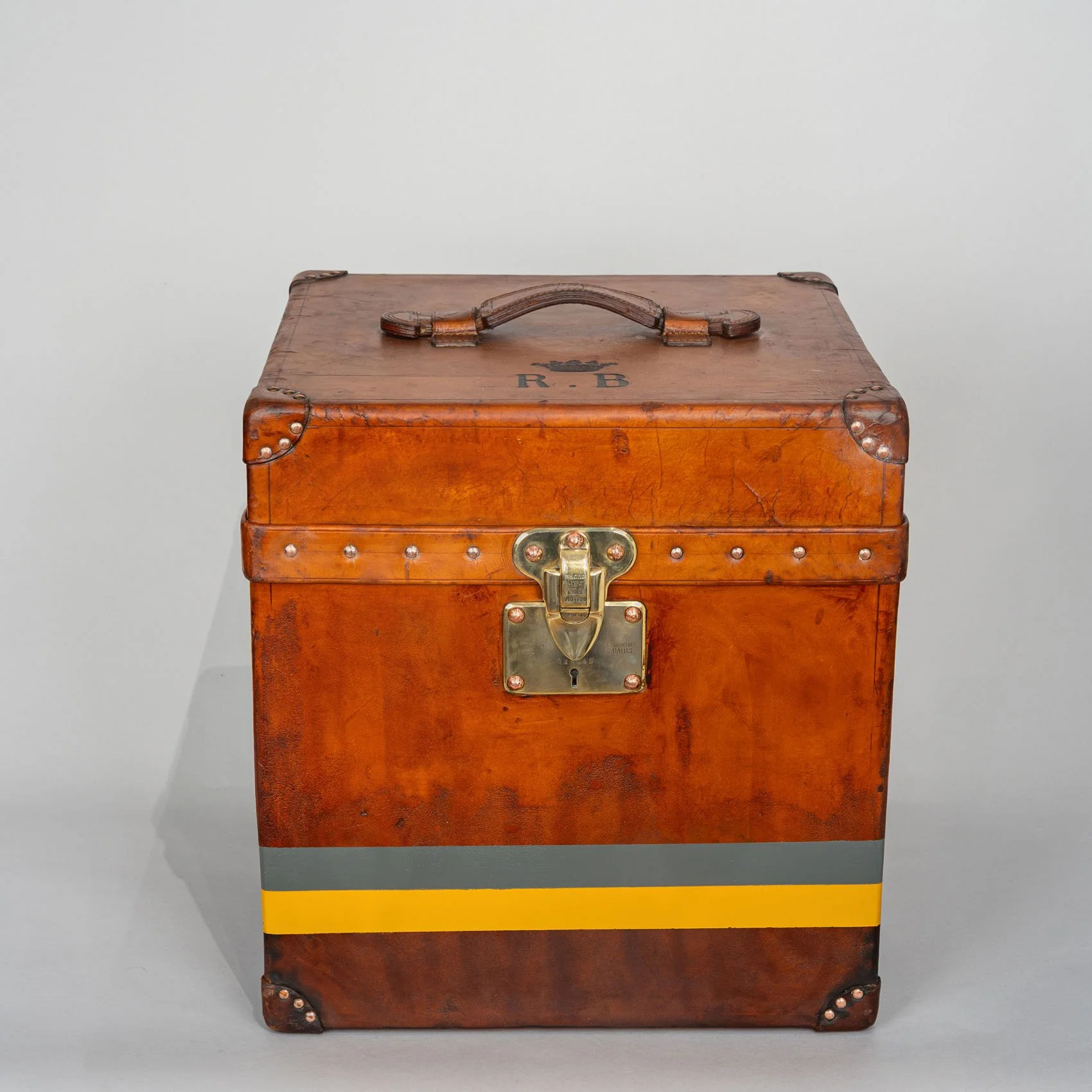 Image 1 of 3
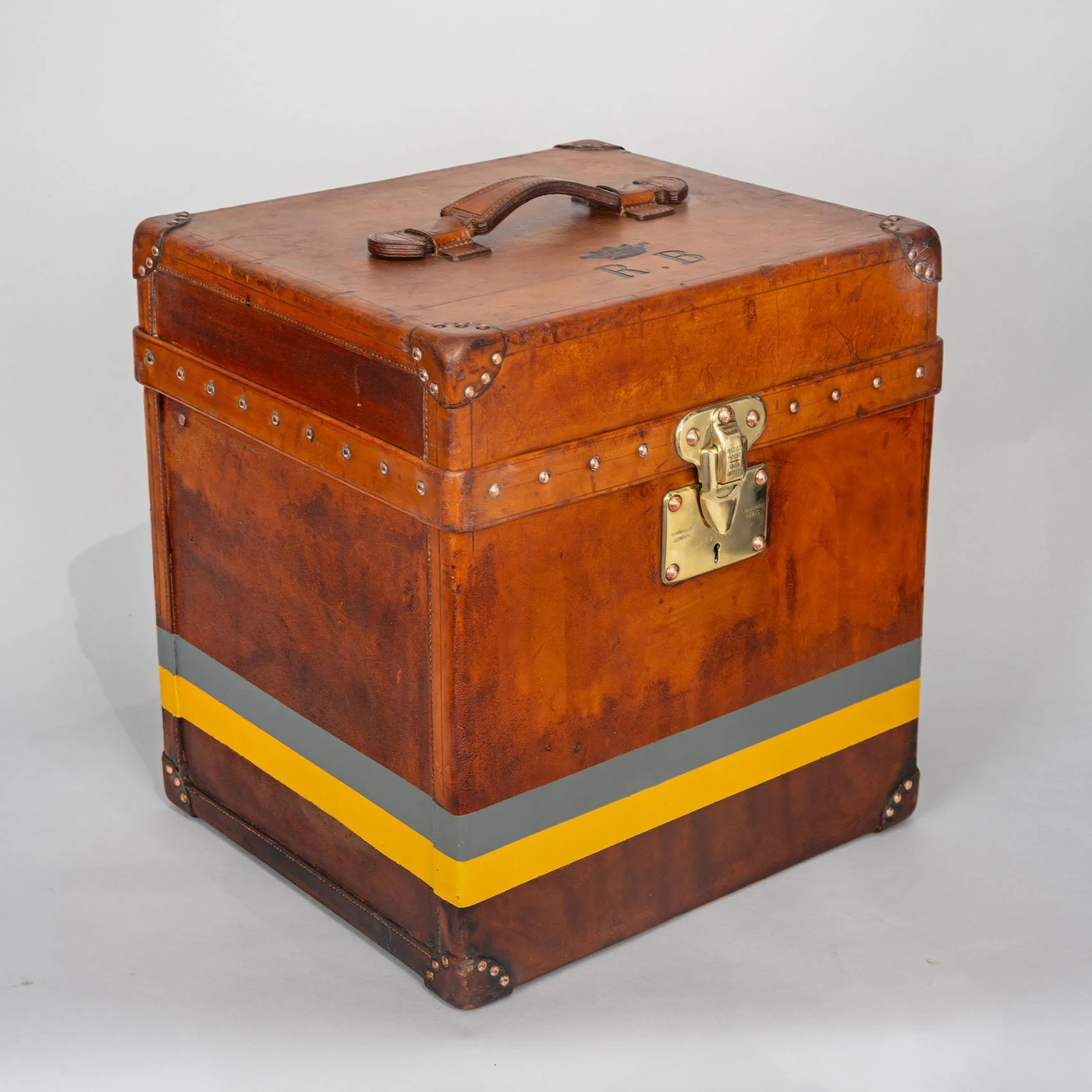 Image 2 of 3
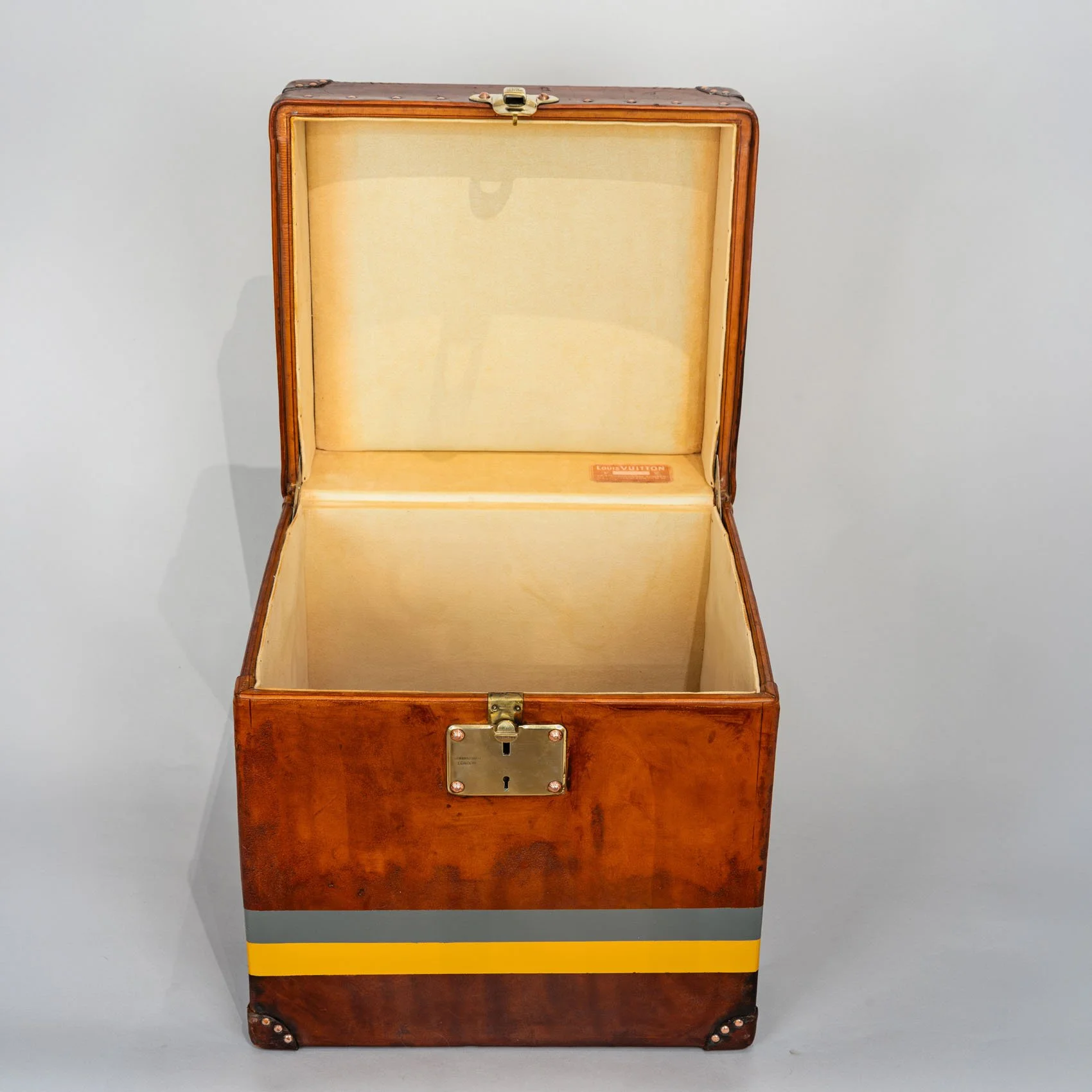 Image 3 of 3