Monumental Swiss “Black Forest” Figure Group
“The Three Ages of Man” — Johann Huggler, Brienz, circa 1870
Signed: J. HUGGLER.
A monumental and deeply personal Swiss walnut carving by Johann Huggler, conceived as The Three Ages of Man, in which the artist portrays himself at three stages of life within a dynamic hunting composition.
The group unfolds as a vertical narrative: the central standing figure, poised with rifle in hand, represents Huggler in his prime; below, an older, stooped figure labors under the weight of experience, while a younger companion looks upward with energy and anticipation. Together, they form a compelling meditation on youth, maturity, and age—an autobiographical reflection rendered with both psychological insight and artistic confidence.
Huggler’s independence and well-known sense of humor are subtly embedded in the scene. Renowned locally as both master carver and unapologetic poacher, he is believed to have cast himself and his companions in a quietly satirical light—hunters who glance outward as if wary of authority. This interplay of identity, wit, and narrative is entirely characteristic of his work.
Technically, the carving reflects the highest achievements of the Brienz school. The composition is ambitious yet controlled, with deeply undercut carving, confident figural modeling, and a richly detailed naturalistic base. The integration of figures and terrain—particularly the finely worked forest floor—demonstrates a level of sophistication associated with Huggler’s finest works, where authorship is recognized as much by hand and composition as by any mark.
The present work is signed J. HUGGLER, a form of marking associated with the master and his workshop, and one that supports attribution alongside the carving’s distinctive technical and compositional characteristics.
Such works belong to the tradition that brought Swiss wood carving international acclaim in the late 19th century. Carvers from Brienz, including Huggler, exhibited at the great international exhibitions—London, Paris, and notably the World’s Columbian Exposition in Chicago in 1893—where their carvings were judged not merely as craft, but as sculpture of the highest order.
American collectors played a central role in this success. The Chicago Exhibition of 1893 in particular introduced Swiss carvings to a wide American audience, establishing a lasting demand that continues today. Large-scale figural groups of this complexity and personal significance remain among the most sought-after works in the genre.
Huggler himself famously remarked, “Meine Arbeit ist mein Name” (“My work is my name”), underscoring the importance of connoisseurship in attributing his carvings. Whether signed or not, it is the distinctive handling, composition, and expressive character that define his authorship—qualities fully realized in this exceptional example.
A work of both artistic ambition and personal meaning, The Three Ages of Man stands among the most compelling expressions of the Swiss “Black Forest” tradition.
Height: 48 inches (122 cm)
Monumental Swiss “Black Forest” Figure Group
“The Three Ages of Man” — Johann Huggler, Brienz, circa 1870
Signed: J. HUGGLER.
A monumental and deeply personal Swiss walnut carving by Johann Huggler, conceived as The Three Ages of Man, in which the artist portrays himself at three stages of life within a dynamic hunting composition.
The group unfolds as a vertical narrative: the central standing figure, poised with rifle in hand, represents Huggler in his prime; below, an older, stooped figure labors under the weight of experience, while a younger companion looks upward with energy and anticipation. Together, they form a compelling meditation on youth, maturity, and age—an autobiographical reflection rendered with both psychological insight and artistic confidence.
Huggler’s independence and well-known sense of humor are subtly embedded in the scene. Renowned locally as both master carver and unapologetic poacher, he is believed to have cast himself and his companions in a quietly satirical light—hunters who glance outward as if wary of authority. This interplay of identity, wit, and narrative is entirely characteristic of his work.
Technically, the carving reflects the highest achievements of the Brienz school. The composition is ambitious yet controlled, with deeply undercut carving, confident figural modeling, and a richly detailed naturalistic base. The integration of figures and terrain—particularly the finely worked forest floor—demonstrates a level of sophistication associated with Huggler’s finest works, where authorship is recognized as much by hand and composition as by any mark.
The present work is signed J. HUGGLER, a form of marking associated with the master and his workshop, and one that supports attribution alongside the carving’s distinctive technical and compositional characteristics.
Such works belong to the tradition that brought Swiss wood carving international acclaim in the late 19th century. Carvers from Brienz, including Huggler, exhibited at the great international exhibitions—London, Paris, and notably the World’s Columbian Exposition in Chicago in 1893—where their carvings were judged not merely as craft, but as sculpture of the highest order.
American collectors played a central role in this success. The Chicago Exhibition of 1893 in particular introduced Swiss carvings to a wide American audience, establishing a lasting demand that continues today. Large-scale figural groups of this complexity and personal significance remain among the most sought-after works in the genre.
Huggler himself famously remarked, “Meine Arbeit ist mein Name” (“My work is my name”), underscoring the importance of connoisseurship in attributing his carvings. Whether signed or not, it is the distinctive handling, composition, and expressive character that define his authorship—qualities fully realized in this exceptional example.
A work of both artistic ambition and personal meaning, The Three Ages of Man stands among the most compelling expressions of the Swiss “Black Forest” tradition.
Height: 48 inches (122 cm)

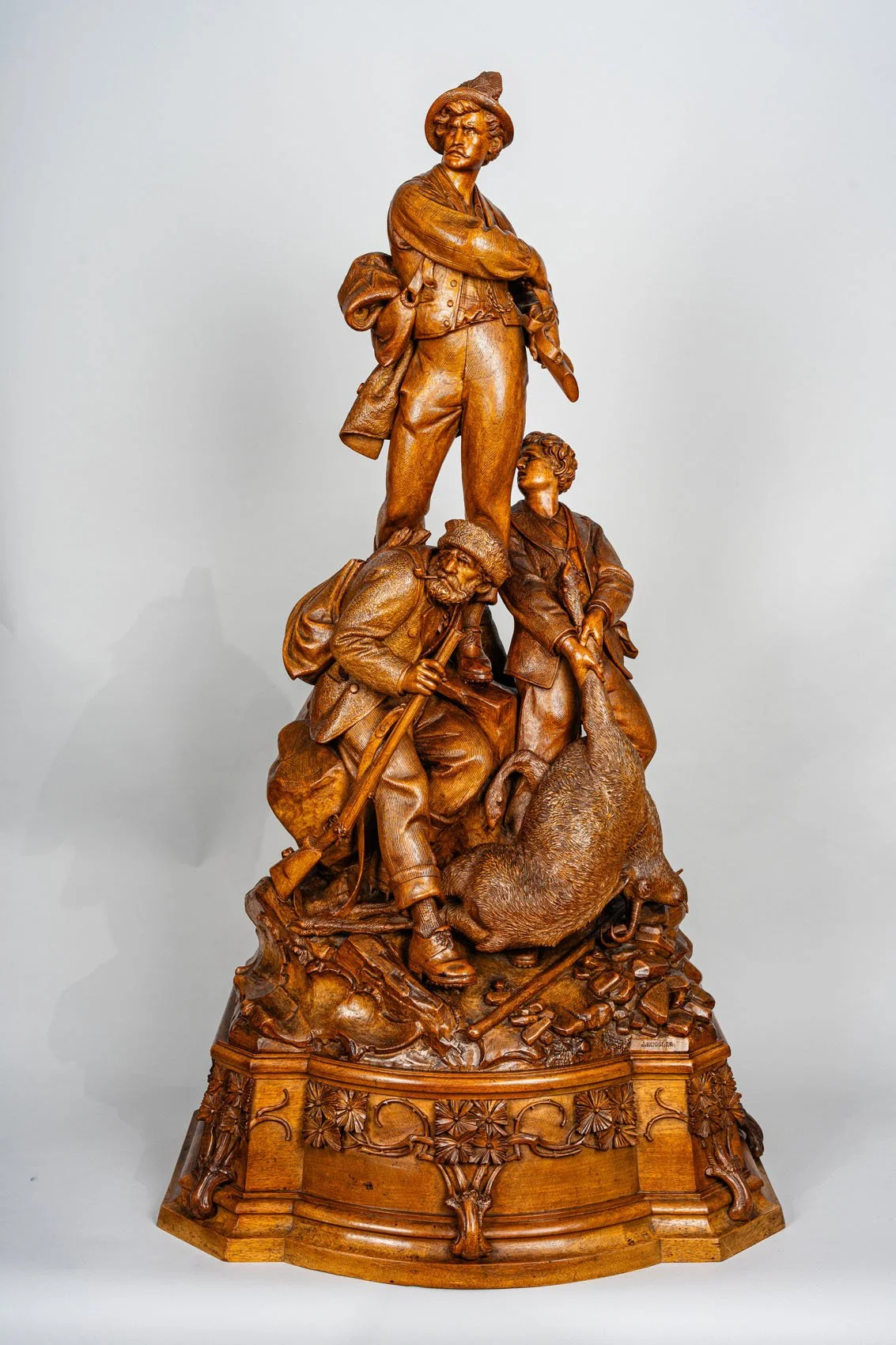 Image 1 of 6
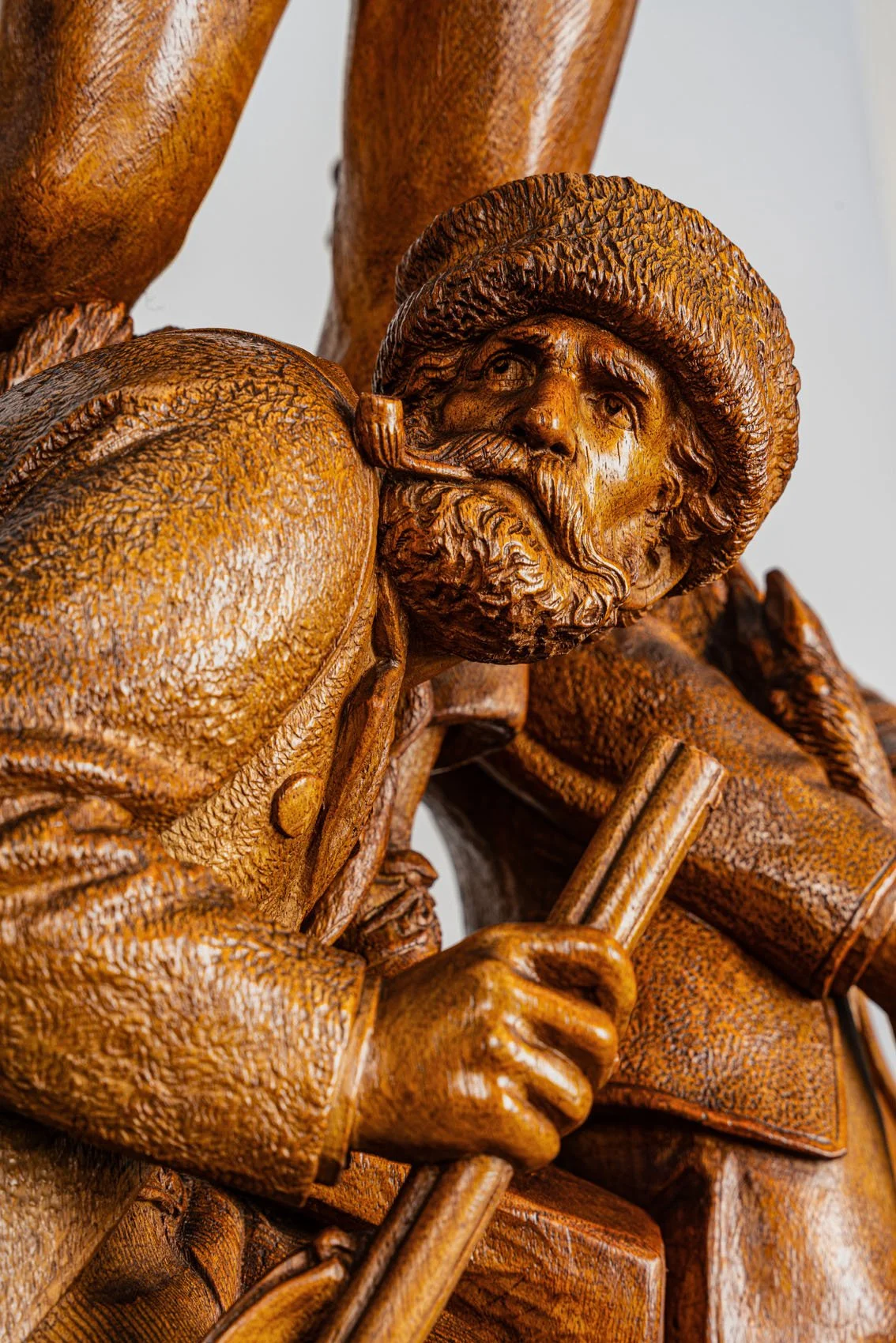 Image 2 of 6
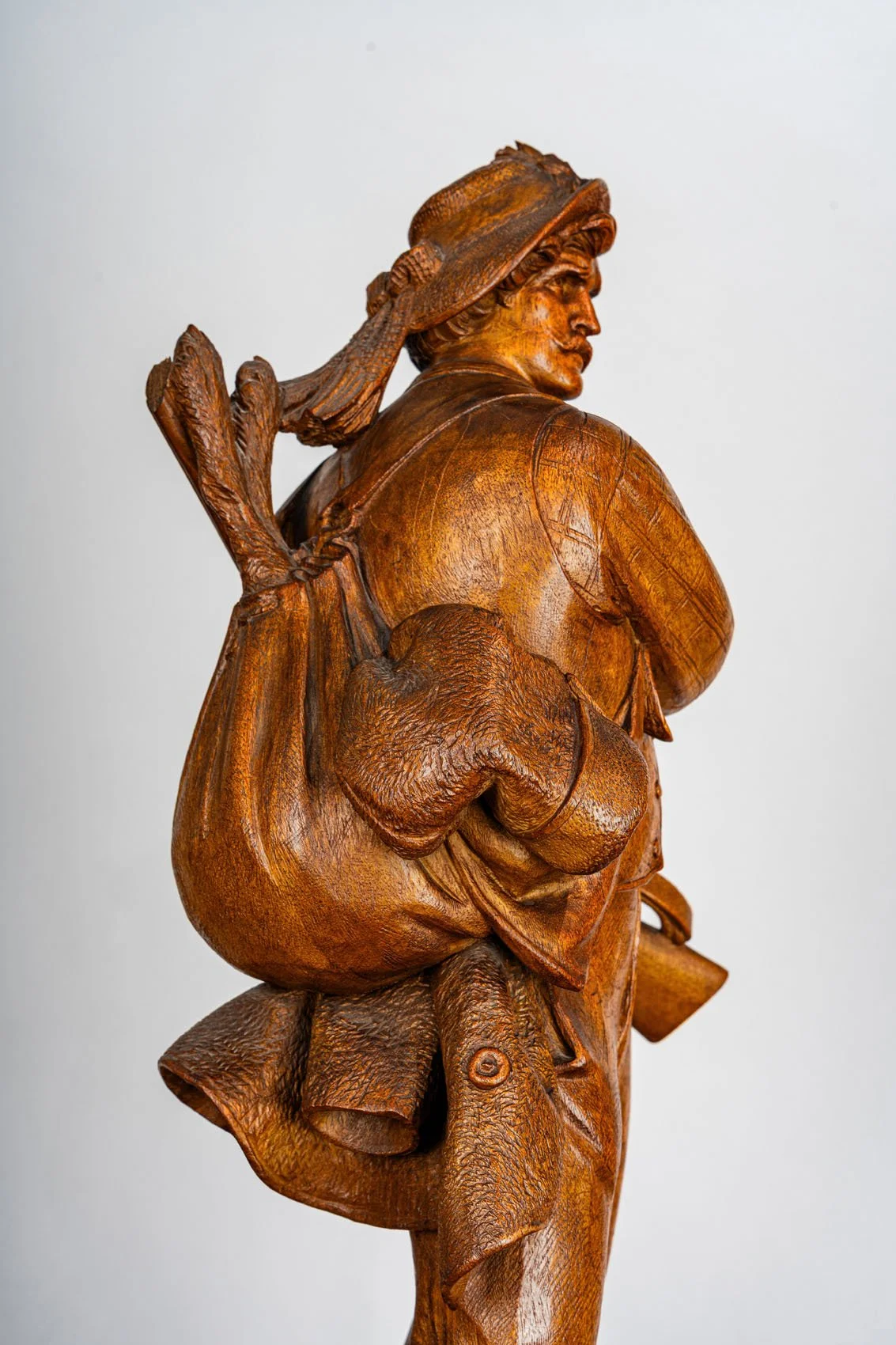 Image 3 of 6
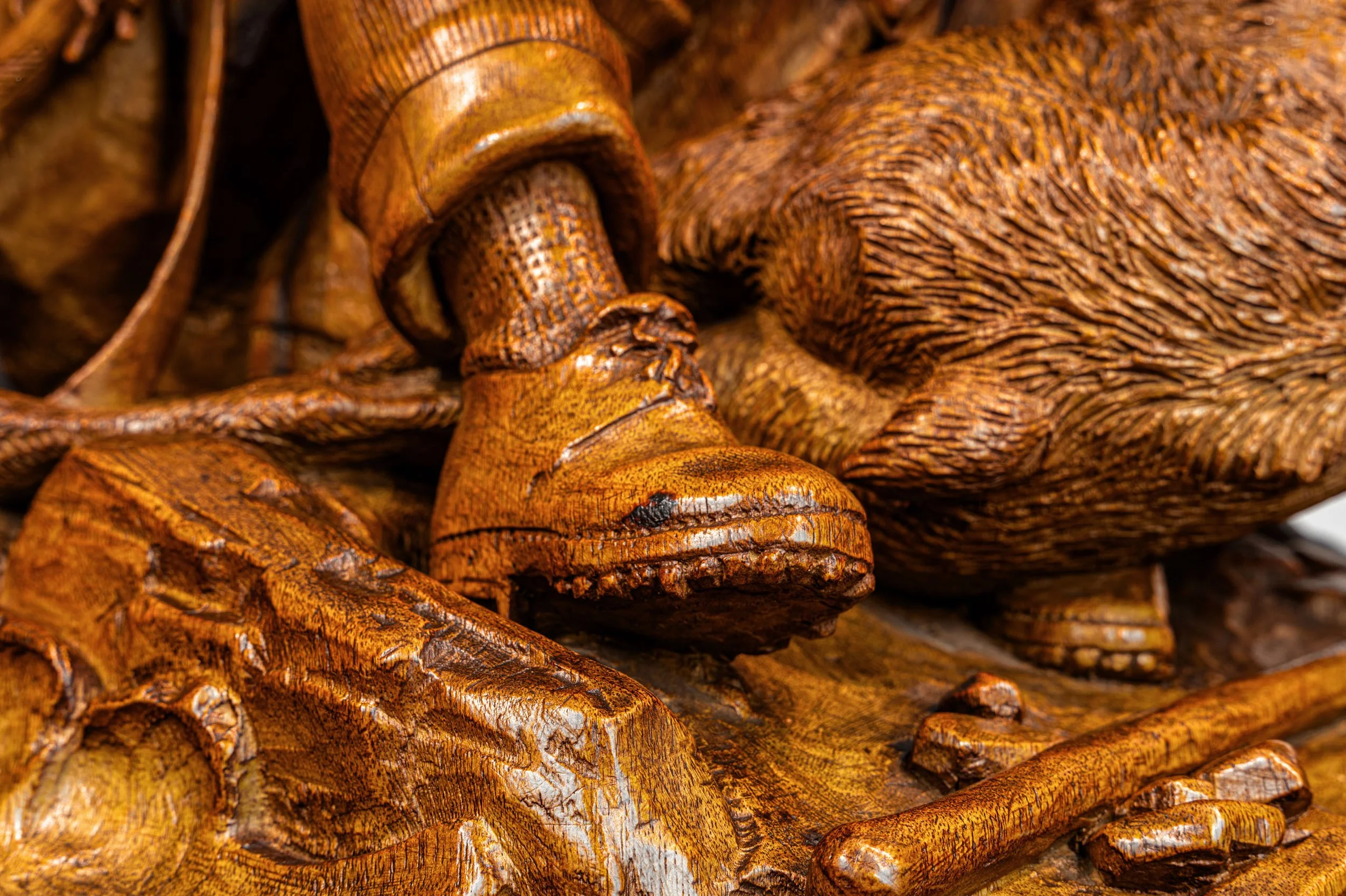 Image 4 of 6
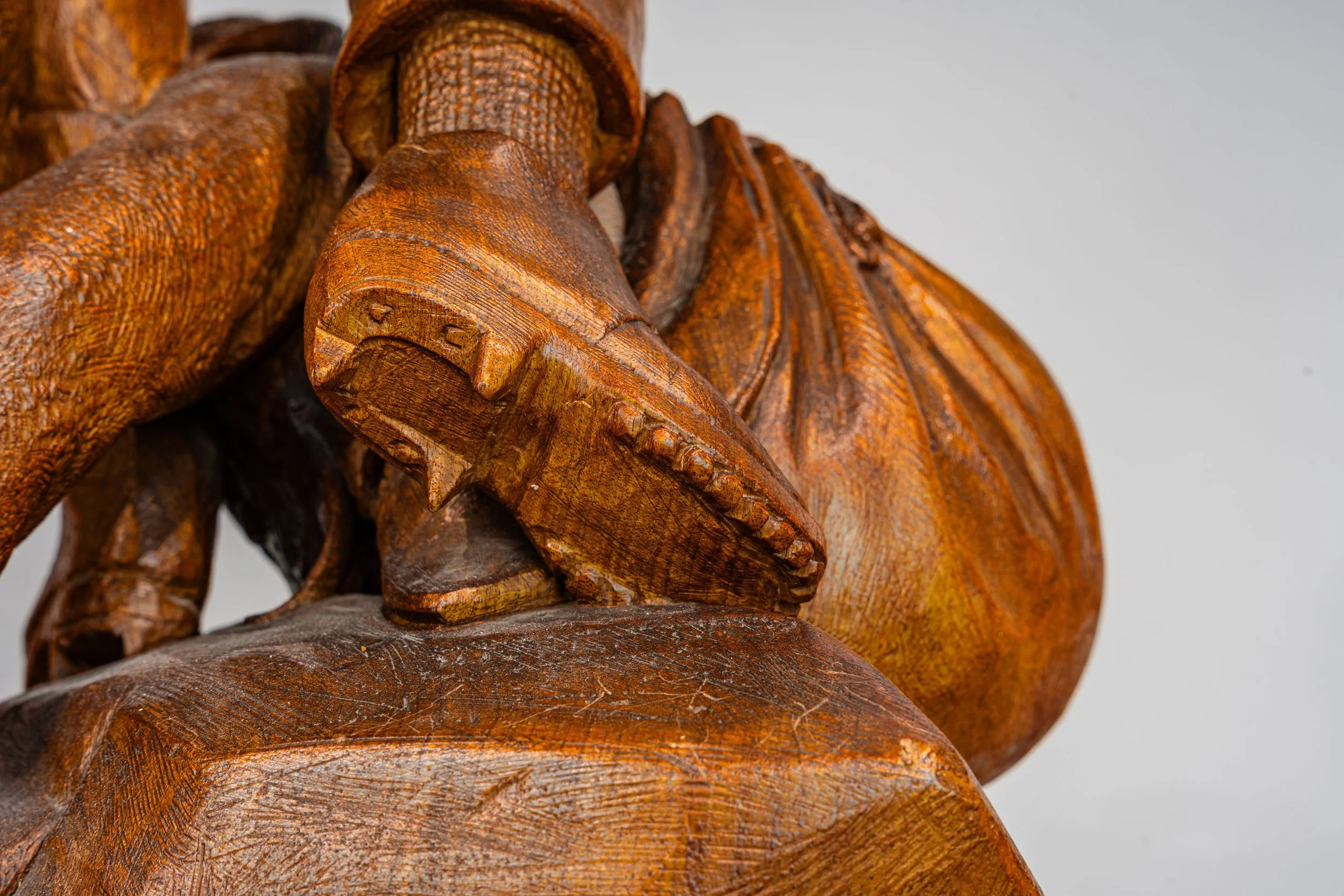 Image 5 of 6
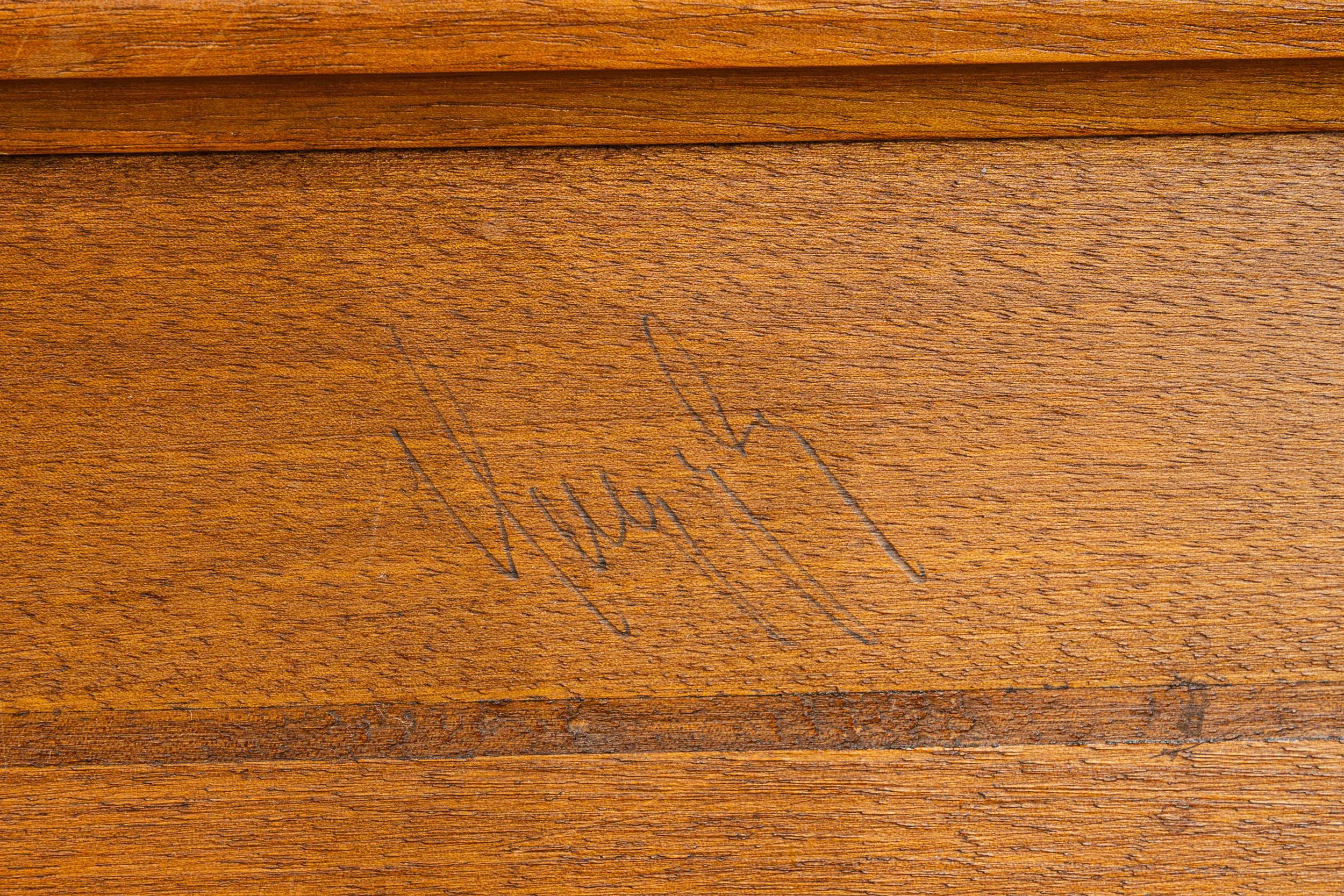 Image 6 of 6