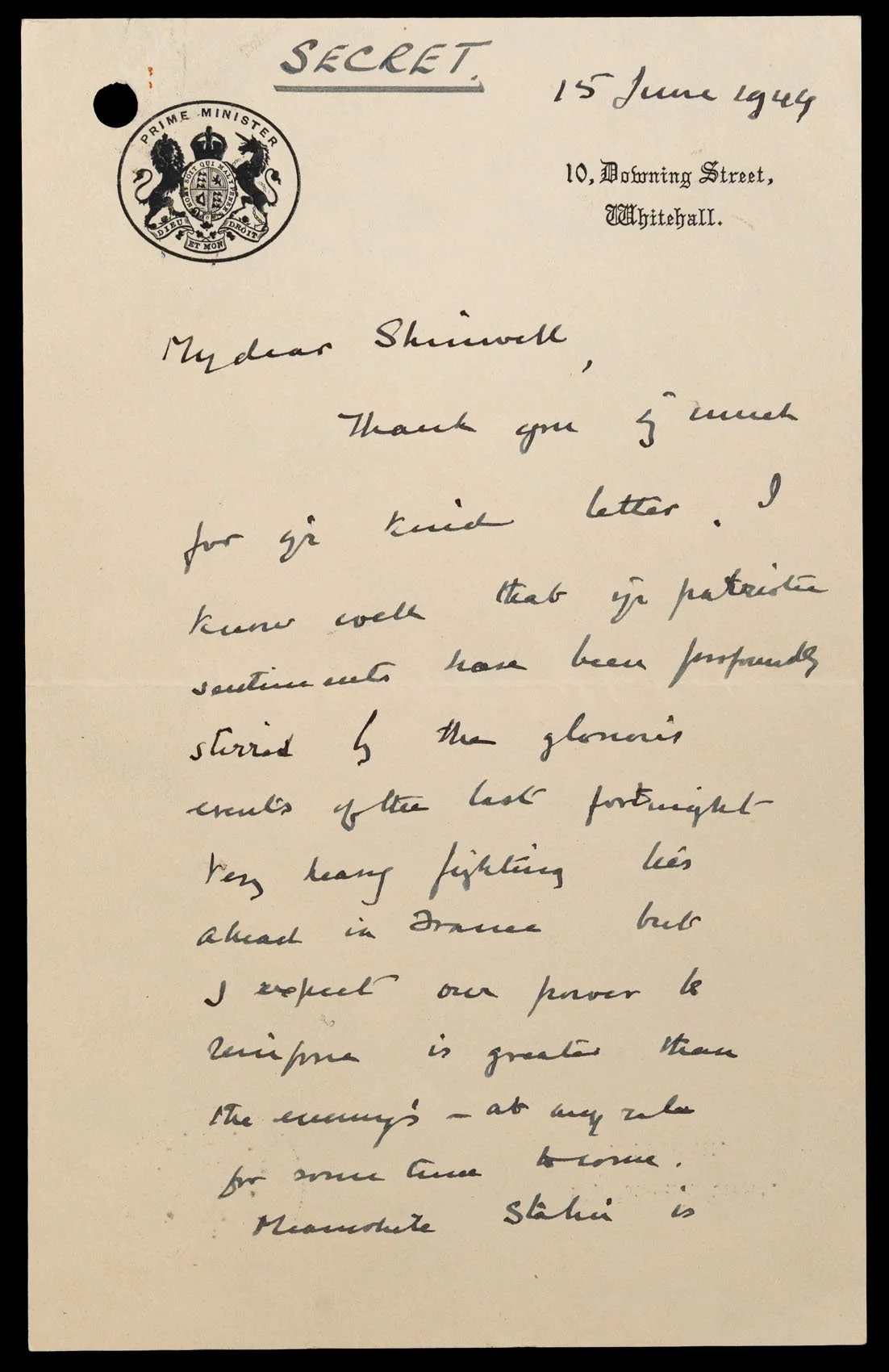
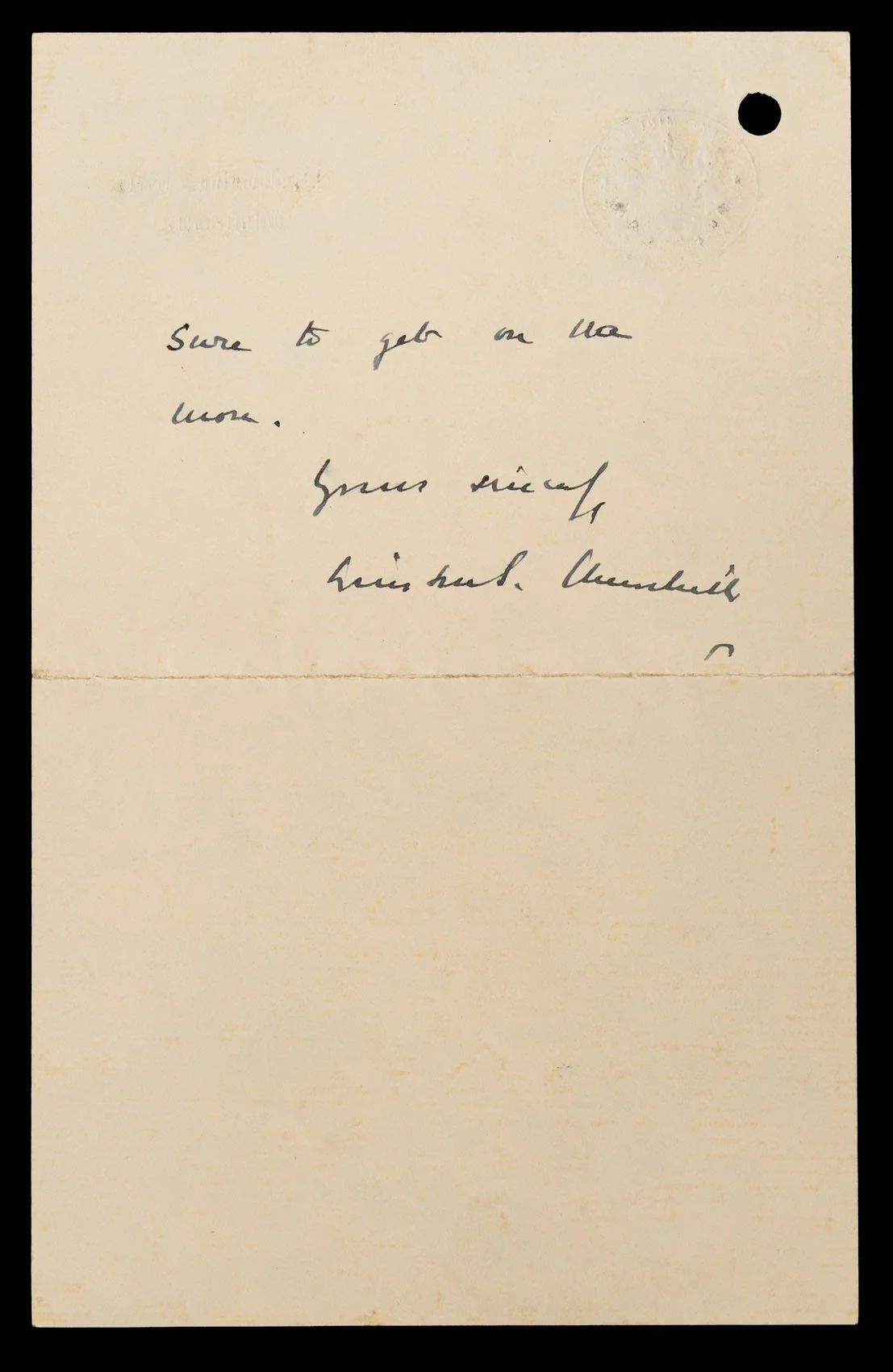
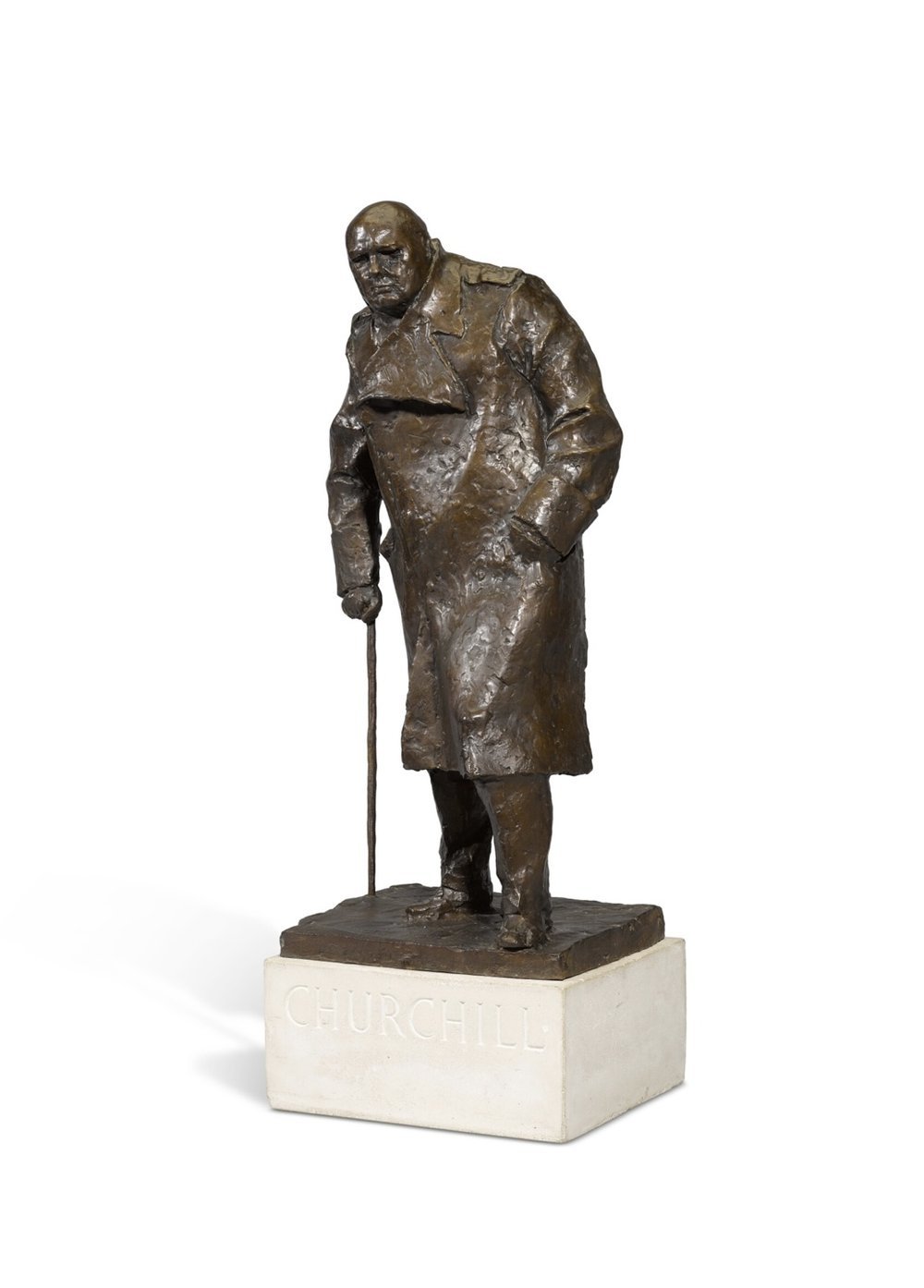
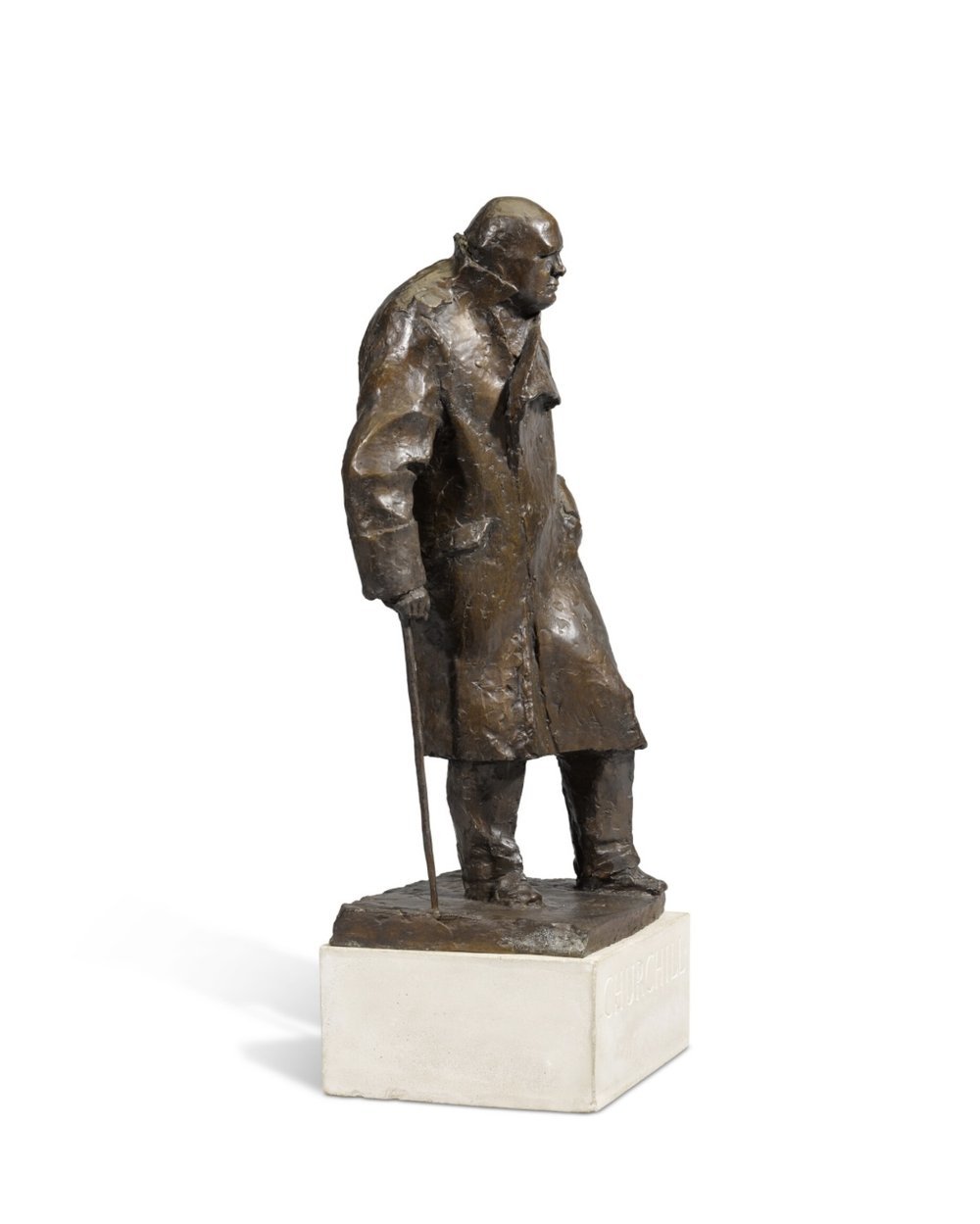
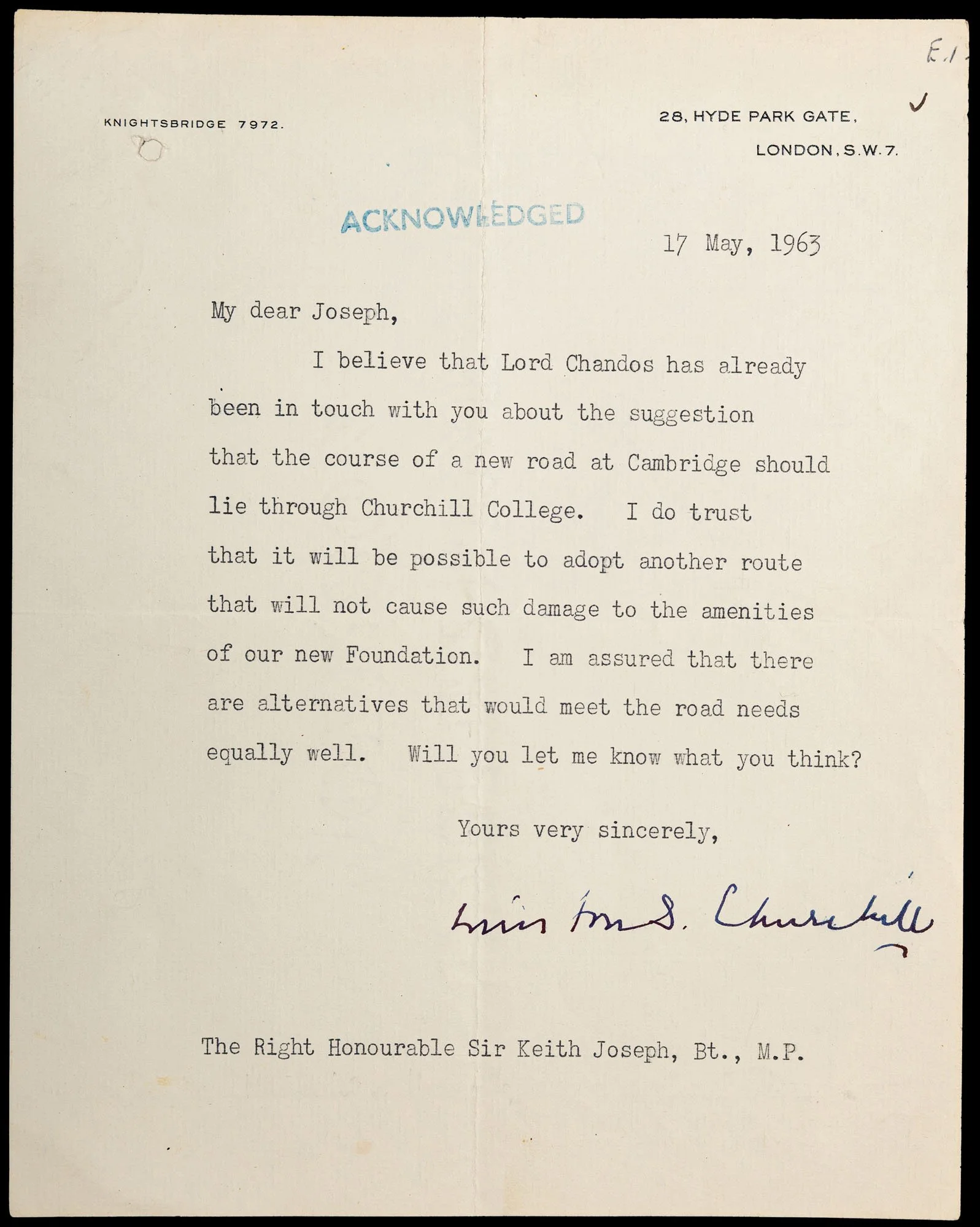
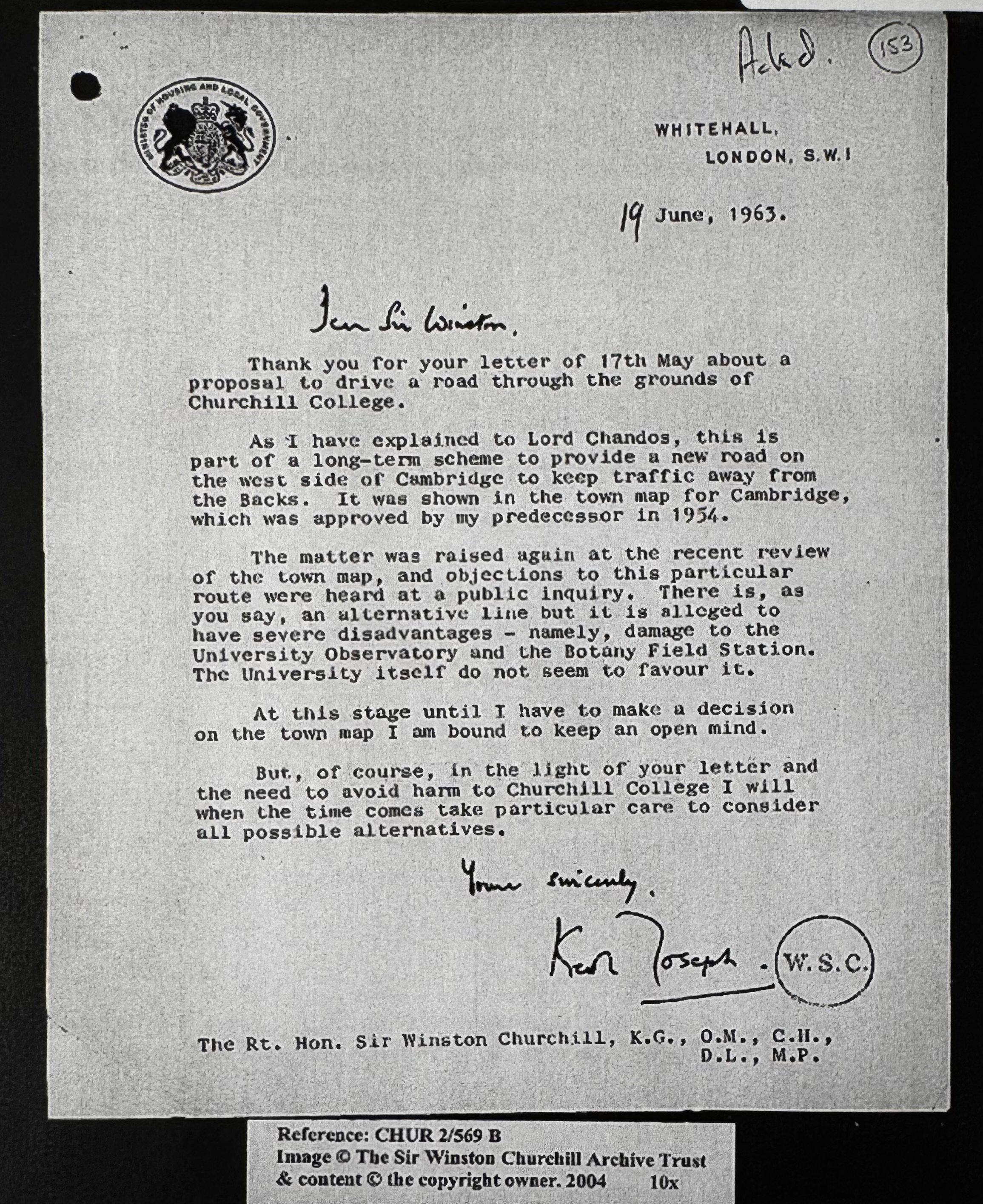
A typed letter signed by Winston S. Churchill on Chartwell letterhead, 12 November 1938, to the journalist R. J. Minney, with autograph salutation and signature, written six weeks after the Munich Agreement in the depth of the Wilderness Years. Minney had urged him to mount a speaking campaign in the manner of Gladstone to rouse the nation from its post-Munich complacency; Churchill replies with striking frankness: "I am afraid that making speeches in the country no longer has the old effect."
He explains that such speeches were no longer reported or debated as they had been before the First World War, and that earlier in the year he had already undertaken a series of meetings "to warn the country of what was coming," drawing large audiences and cross-party platforms, yet "while the labor entailed was enormous, it did not seem to produce the slightest result."
This is Churchill at the pivot of the pre-war years: out of office, accurate in his assessment of Hitler, unable to move Chamberlain's policy of appeasement, and confronting the failure of his own voice to carry. Minney's appeal of 11 November 1938 is included in a carbon copy.
Single sheet, typed on one side; central folds, light toning, faint paperclip impression at the head; the carbon with paperclip rust mark and minor edge wear; very good overall.
Provenance: Sotheby's, 22 July 1982, lot 153.
Literature: Quoted in Martin Gilbert, Winston Churchill, vol. V (1976), p. 1019.
A typed letter signed by Winston S. Churchill on Chartwell letterhead, 12 November 1938, to the journalist R. J. Minney, with autograph salutation and signature, written six weeks after the Munich Agreement in the depth of the Wilderness Years. Minney had urged him to mount a speaking campaign in the manner of Gladstone to rouse the nation from its post-Munich complacency; Churchill replies with striking frankness: "I am afraid that making speeches in the country no longer has the old effect."
He explains that such speeches were no longer reported or debated as they had been before the First World War, and that earlier in the year he had already undertaken a series of meetings "to warn the country of what was coming," drawing large audiences and cross-party platforms, yet "while the labor entailed was enormous, it did not seem to produce the slightest result."
This is Churchill at the pivot of the pre-war years: out of office, accurate in his assessment of Hitler, unable to move Chamberlain's policy of appeasement, and confronting the failure of his own voice to carry. Minney's appeal of 11 November 1938 is included in a carbon copy.
Single sheet, typed on one side; central folds, light toning, faint paperclip impression at the head; the carbon with paperclip rust mark and minor edge wear; very good overall.
Provenance: Sotheby's, 22 July 1982, lot 153.
Literature: Quoted in Martin Gilbert, Winston Churchill, vol. V (1976), p. 1019.

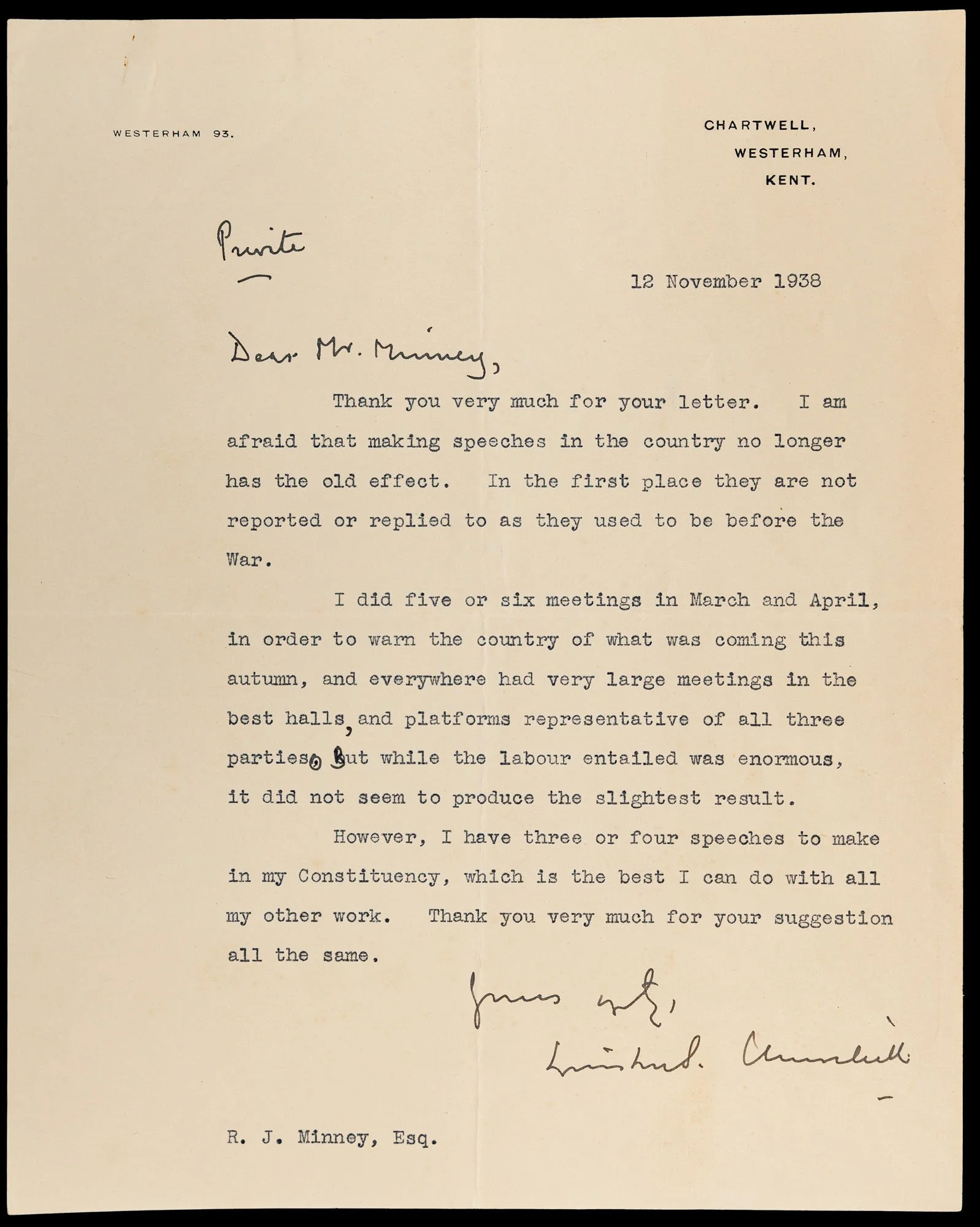 Image 1 of 2
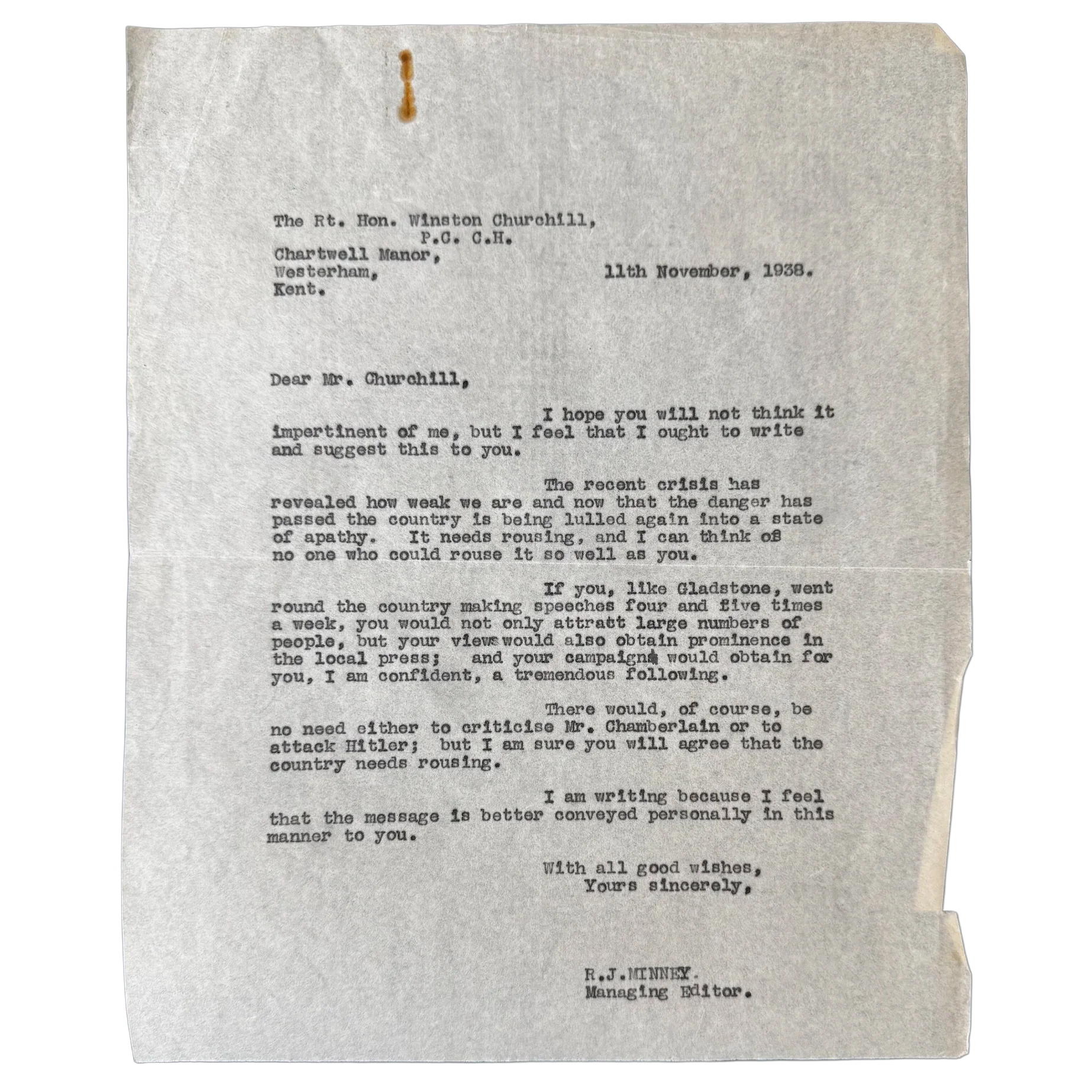 Image 2 of 2